
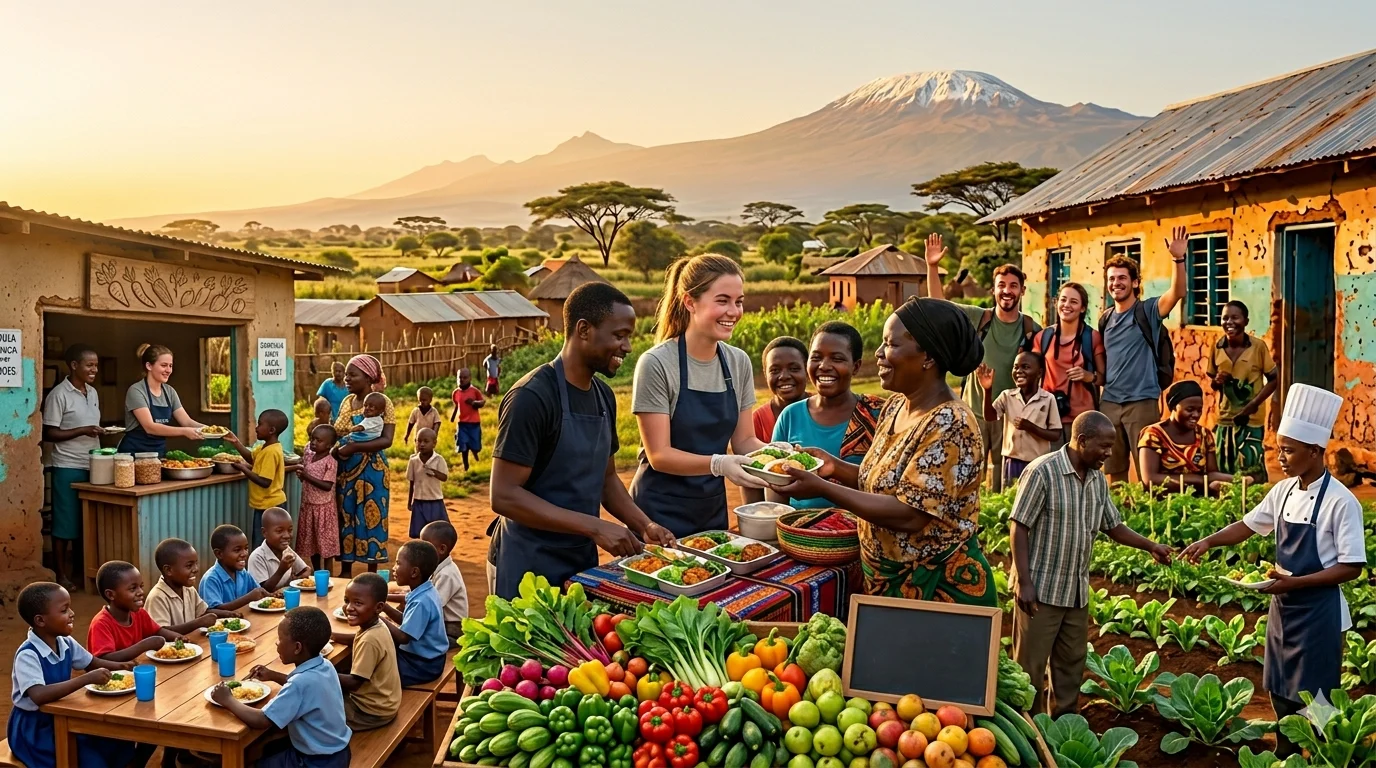
A restaurant is not just a place to have food. A restaurant is a point of gathering for a variety of people, and a source of jobs. A restaurant serves a community in many ways. Around the world, kitchens and dining rooms are finding creative ways to give back.
In this article, we look at how restaurants support local communities, what food charity volunteering involves, and how these ideas connect with community development volunteering in Tanzania.
Restaurants As Community Hubs
Restaurants are the hub of discussions, opinions, gatherings, and tasty food. People meet over meals, celebrate milestones and build friendships across the table. That central role gives food businesses a natural chance to support the people around them.
Many owners already know their regular customers by name. When a business is woven into a community like this, giving back feels less like charity and more like looking after family. From small cafes to large kitchens, restaurants have a reach that few other businesses enjoy.
Ways Restaurants Give Back
Food makes everything interesting. Good food sets a good mood, and every restaurant business uses this to make a difference and give back in many creative ways. Some of the most common include:
- Food donation programs that pass surplus meals and ingredients to shelters, schools and families in need
- Fundraising nights where part of the bill goes to a local cause
- Sourcing ingredients from nearby farmers and suppliers to keep money in the area
- Offering training and jobs to young people and others who need a start
- Hosting community events that bring neighbours together
These efforts do more than feed people. They reduce waste, support local farmers and send a clear message that the business cares about more than profit.
What is Food Charity Volunteering?
Food charity volunteering is the concept of people giving their time to prepare, collect or share food with those who need it. Volunteers might cook in a community kitchen, sort donations at a food bank, or help run a meal service for children.
For restaurants, this can mean encouraging staff to volunteer together or partnering with a local charity on a regular basis. It is rewarding work that builds team spirit and creates a real bond between the business and the community. Restaurant volunteer programs of this kind turn everyday skills, like cooking and serving, into a force for good.
Why Food and Nutrition Matter in Tanzania?
Tanzania has great natural beauty, but in some of the areas people do not have access to daily meals. Many places in Africa are underprivileged, and not many people are educated. They still follow the centuries-old traditional ways even today. These places require development. Good nutrition helps children grow, stay healthy and concentrate at school. When meals are missing, learning and development suffer.
This is why food and community support go hand in hand. Volunteering programs that feed children at school or supply families with fresh produce do more than fill stomachs. They give young people the strength and focus they need to thrive, and they ease the burden on parents who are doing their best with very little.
Community Development Volunteering in Tanzania
Volunteering is the idea of giving through which food connects with the wider work of volunteering. At Hostel Hoff in Moshi, community development sits at the centre of what we do. Volunteers support orphanages, schools and women’s groups, many of which rely on shared meals and steady nutrition to keep children healthy and happy.
Our community development in Tanzania projects show how small, steady efforts add up to lasting change. Over the years, this work has included building homes, supporting orphanages, running microloan schemes for women’s groups and helping children access medical care. You can read more about these long-term efforts in our article on community development projects in Tanzania.
Women’s groups are a wonderful example. Many local women run small catering and cooking businesses, and with the right support they can grow more self-reliant. Volunteers who enjoy food and cooking can share skills, help with simple business ideas and learn local recipes in return. It is a true exchange that benefits everyone involved.
How Food Lovers and Businesses Can Help?
You do not need to own a restaurant to make a difference through food. Anyone who loves cooking and community can take part. Here are a few ideas.
- Volunteer with a local meal or childcare project during your time in Tanzania
- Support women’s groups that run catering and food businesses
- Help schools and orphanages with kitchen gardens and nutrition projects
- Share simple, healthy recipes that use local ingredients
Restaurant owners reading this can think bigger. Setting up food donation programs, partnering with a local charity or sponsoring a school meal scheme can change lives far beyond the dining room. Organising charity food fests and donating all the money they earn through that program to an orphanage, or an old age home or helping women’s groups. To see how community work creates real change, explore our guide to the impact of volunteering on local communities.
The Ripple Effect of Giving Through Food
When a restaurant or a volunteer shares food, the benefits spread much further than a single meal. A child who eats well can focus in class. A mother who runs a small food stall can pay school fees. A farmer who supplies fresh produce earns a steady income. One simple act of generosity sets off a chain of good that touches many lives.
This ripple effect is why food-based giving is so powerful. The people might not understand your language, but they do understand the language of food, which is to spread love. It is not only about meeting an immediate need. It is about building stronger, healthier and more independent communities for the long run.
Kitchen gardens and lasting nutrition
One of the most rewarding ways to support a community is to help it grow its own food. Kitchen gardens at schools and orphanages give children fresh vegetables, teach them valuable skills and lower the cost of feeding large groups.
Volunteers can help dig, plant and care for these gardens, or share knowledge about simple, healthy cooking. Over time, a small patch of land can become a steady source of nutrition that keeps giving year after year. It is a gentle reminder that lasting change often grows from small, patient effort.
A Win For Everyone Involved
The wonderful thing about food and community work is that it rewards everyone. Local families gain better nutrition and new skills. Restaurants and businesses build goodwill and a deeper bond with the people they serve. Volunteers gain unforgettable memories, new friendships and the joy of seeing their help make a real difference.
Food breaks down barriers in a way that few things can. Sharing a meal, cooking side by side or harvesting vegetables together creates connection and trust. In Tanzania, where hospitality runs deep, this shared spirit makes community work especially meaningful.
Bringing It All Together
Food has a special power to bring people together and to lift those who are struggling. Whether through a restaurant that runs food donation programs, a team that takes part in food charity volunteering or a traveller who joins a community kitchen, every act of giving counts.
Tanzania is a place to share and spread goodwill. By taking part in community development volunteering, you can help make sure more children eat well, more women build thriving businesses and more communities grow stronger together. Even the smallest contribution adds up. A single donated meal, an afternoon spent in a community kitchen or a few vegetables grown in a school garden can brighten a child’s day and ease a family’s worry. When many people each give a little, the result is a community that is healthier, happier and far more hopeful.
If you would like to be part of this work, Hostel Hoff would love to welcome you. Come and discover how good food, good people and a generous heart can change a community for the better.