
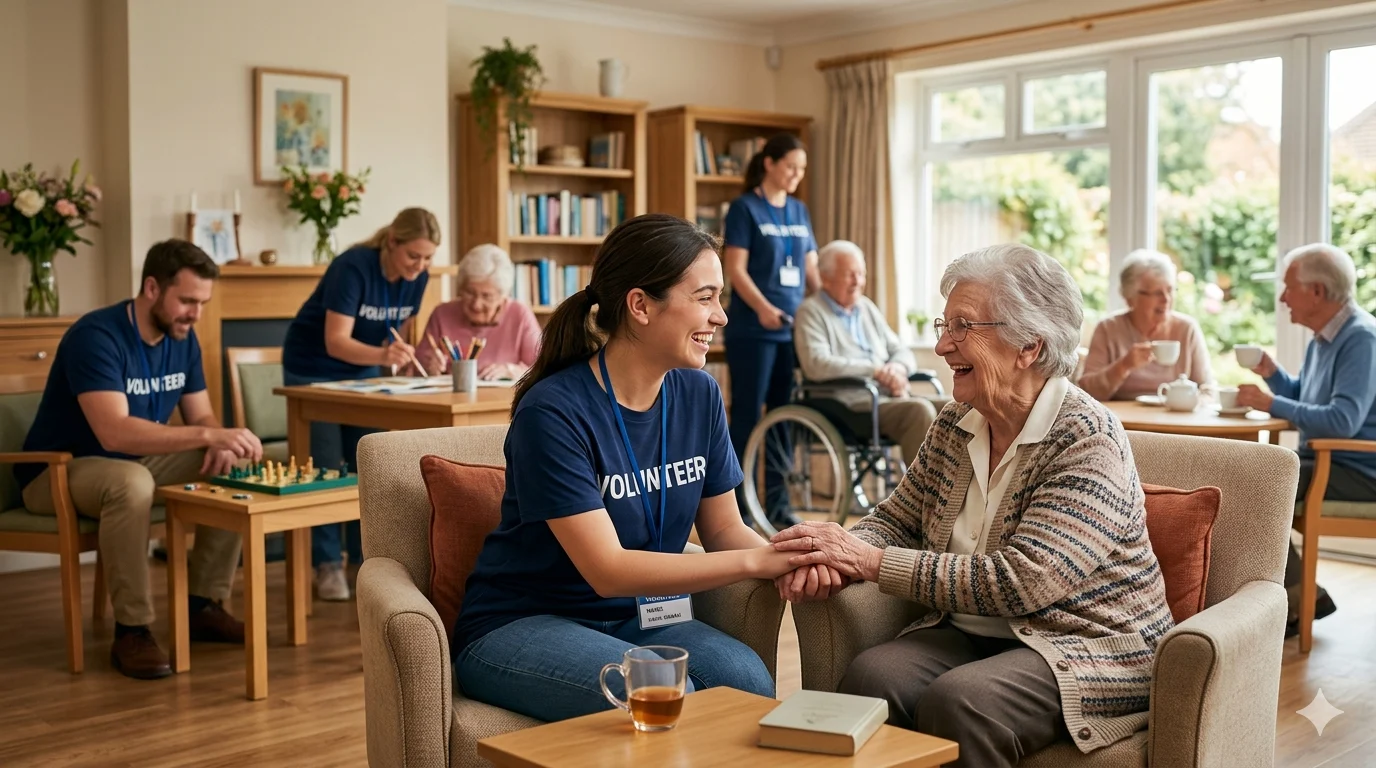
Have you ever thought about making a real difference in someone’s life without needing a special degree or professional background? Volunteering at a nursing home is one of the most meaningful things you can do with your free time. It costs you a few hours a week. Whether you are a student, a retiree, or simply someone with a warm heart and a free weekend, this guide will walk you through everything you need to know.
Why Do Nursing Homes Need Volunteers?
Nursing homes are staffed by dedicated healthcare professionals who work hard to meet residents’ medical and physical needs every single day. However, the social and emotional aspects of care are often not fully attended to by nurses and administrators due to time constraints.
That is where volunteers come in. After just one month of returned volunteer activity following a COVID-19 interruption, residents showed measurable improvement in their overall health scores. Put simply, your presence as a volunteer can change the emotional texture of someone’s day and their overall wellbeing.
What Do Nursing Home Volunteers Do?
If you are wondering what nursing home volunteers do on a typical visit, the answer is both simple and varied. Volunteers help with tasks such as playing card games, hosting bingo nights, decorating hallways for the seasons, giving manicures, assisting residents with tidying their rooms, and simply sitting down for a chat over lunch.
Here are some of the most common roles:
Companionship and conversation: Many residents go long stretches without seeing family. A thirty-minute conversation can lift spirits considerably.
Group activity support: Volunteers help run trivia games, art classes, movie afternoons, and sing-alongs organized by the activity director.
Reading and writing assistance: Some residents find it hard to read mail or write letters independently. Helping with these tasks is a deeply personal form of support.
Mobility support: Transporting residents in wheelchairs to therapy sessions or common areas is often handled by volunteers at many facilities.
Entertainment and talent sharing: Playing music, performing a magic show, or leading a simple yoga session are all welcome to residents and staff alike.
Residents who appear angry, detached, or confused due to illnesses such as dementia will respond to the presence and stimulation of another person.
Nursing Home Volunteering Requirements
Before you show up at the front desk ready to help, it is worth understanding what nursing home volunteer requirements typically entail. The good news is that most facilities do not ask for formal qualifications. What they do ask for is reliability, a warm attitude, and a genuine interest in spending time with older adults.
Here are the few requirements you need to look into:
Age: Most nursing homes require volunteers to be at least 15 or 16 years old.
Application and interview: You will fill out a short form and speak with the volunteer coordinator about your interests and availability.
Criminal background check: Because nursing home residents are a vulnerable population, CMS regulations under 42 CFR 483.12 require facilities to screen volunteers who provide direct care.
Health clearances: Many facilities require proof of a TB test and certain vaccinations.
Orientation: Once cleared, you will attend a general orientation covering the facility’s procedures, safety protocols, and expectations.
Just as you would research a volunteer opportunity before committing, it pays to check directly with the nursing home because requirements vary from place to place.
How to Volunteer at a Nursing Home: Step by Step
Here are the steps you need to follow at a nursing home:
Step 1: Identify facilities near you. Search online for nursing homes or senior living communities in your area. A simple search for “nursing home volunteer opportunities near me” can help you get started.
Step 2: Contact the activity director. In most facilities, the activity director or volunteer coordinator manages volunteer intake. Call or email to express your interest, share your availability, and describe any special skills you have.
Step 3: Complete the application process. Submit your application, attend your interview, undergo a background check, and provide required health documents.
Step 4: Attend orientation. Orientation grounds you in the facility’s culture, safety procedures, and the specific needs of its residents.
Step 5: Show up consistently. Start with short, frequent visits rather than occasional, long ones. Residents look forward to familiar faces, and consistency is what builds real trust.
Hostel Hoff is a better volunteering organisation to start with your volunteer journey and enjoy the beauty of Tanzania as well.
Benefits of Volunteering at Nursing Homes
The benefits of volunteering at nursing homes flow in both directions. Residents gain, and so do you.
For residents: Consistent volunteer interaction leads to a marked decrease in depressive symptoms. Volunteers positively affect the quality of life, mobility, and general health of nursing home residents, with social interaction ranked as even more beneficial than physical improvements.
For volunteers: Volunteering is associated with better self-rated health and life satisfaction, and with reduced depression, particularly among older adult volunteers. You will also build communication and empathy skills that are valuable in any career.
Leadership development, a supportive community of like-minded people, and experience relevant to careers in healthcare and social work.
You are also, in a very real sense, gaining life wisdom. Spending time with people who have lived through decades of history is an education no classroom can replicate. For a deeper look at what you personally stand to gain, check out this guide on the mental health benefits of volunteering.
Tips for Making Your Visits Count
A few practical habits will help you get the most out of volunteering in nursing homes.
- Be present: Put your phone away and give the resident your full attention. For someone who rarely has visitors, that undivided focus means everything.
- Learn names and stories: Residents remember volunteers who remember them. Asking about their life and past creates a genuine connection.
- Respect boundaries: Some residents may not want company on certain days. A good volunteer reads the room and respects those wishes.
- Communicate with staff: The nursing team knows each resident’s needs. Keeping that line of communication open ensures your help is always safe and appropriate.
For a broader look at volunteer etiquette, the dos and don’ts of volunteering are worth a read before your first shift.
A nursing home volunteer program is one of the most direct, human, and impactful ways you can give back to your community. You do not need a degree or a special skill. You need warmth, reliability, and a desire to brighten someone’s day. The residents waiting in those common rooms have whole lifetimes of stories to share. All they need is someone to listen. If you are still figuring out where to begin, volunteering with no experience can give you the confidence to take that first step.