
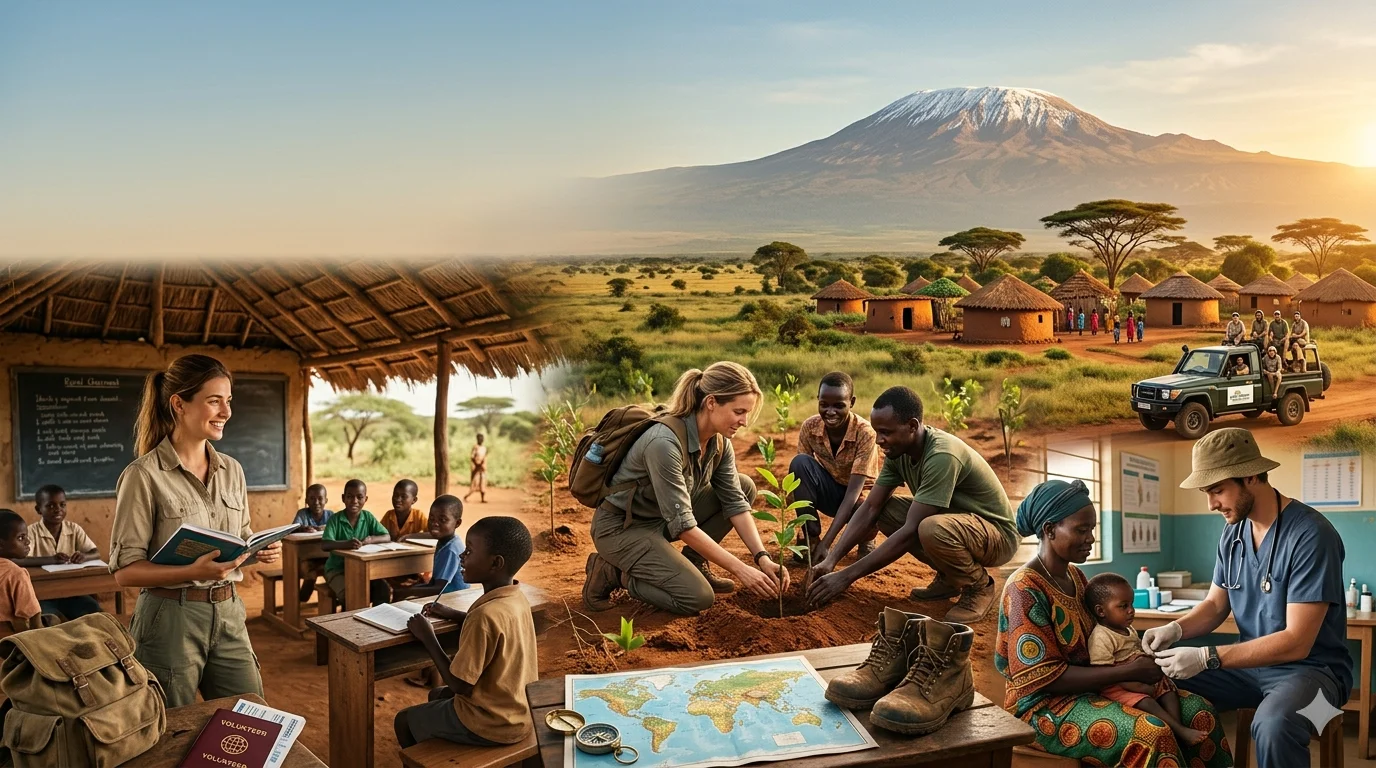
Volunteering is the most rewarding decision you will make to contribute your part into the world. It is also one that deserves serious preparation. This guide covers everything you need to hear before you go: picking the right program, sorting your health requirements, packing smart, respecting local culture, and arriving with the right mindset.
Start with a Trusted Volunteer Organization
The first and most important step is finding a reputable volunteering organization. As not all programs are created equal, and your experience will depend heavily on the quality of support, ethics, and on-the-ground coordination you receive. Look for organizations that are transparent about where your fees go, have verifiable reviews from past volunteers, and operate with sustainable, community-led principles.
Reading reviews from past volunteers gives you genuine insight into what to expect on the ground. Think carefully about what kind of work matches your skills and interests. Teaching, medical support, wildlife conservation, and community development are among the most popular volunteering opportunities in Africa.
Matching your strengths to the right placement makes your contribution genuinely useful rather than merely well-intentioned. Also, clarify the program length, which fees are covered, and whether accommodation and meals are included before you commit.
Important Health and Safety Preparations for Volunteers
Health preparation is non-negotiable. Visit a clinic or your doctor at least 6 to 8 weeks before departure to discuss vaccinations and preventive medications. The yellow fever vaccine is required for entry into several African countries, and malaria prophylaxis is recommended for most parts of the continent.
Additional vaccinations commonly advised for volunteers include Hepatitis A, Hepatitis B, and typhoid, especially if you will be eating local food or working in rural areas. Your doctor will tailor recommendations based on your destination and health history. It is also wise to carry a record of all your vaccinations in both digital and physical form, as some African countries require proof of certain vaccines at the border.
Comprehensive travel insurance is a must. African Impact states that all volunteers must carry insurance that includes emergency medical evacuation and repatriation. This is not optional, and many volunteer organizations will require proof before your placement begins.
Know Your Visa Requirements Before Volunteering in Africa
Africa is a continent of more than 50 countries, each with its own unique entry requirements. Some nations offer a visa-on-arrival for certain passport holders, while others require advance applications.
Tanzania, for example, allows many nationalities to obtain a visa upon arrival, but requirements keep changing. Always verify your visa requirements through your country’s official foreign affairs website and the embassy of your destination country well in advance of travel.
If you are volunteering in Tanzania specifically, it is worth understanding which visa type permits volunteer activity, as this differs from a standard tourist visa.
Smart Packing Tips for Volunteering in Africa
Lightweight, breathable fabrics such as cotton and linen will serve you far better than heavy denim or synthetic blends. Neutral tones such as khaki, olive, tan, and brown are strongly recommended, particularly for outdoor or conservation work. According to research, dark blue and black can attract tsetse flies in some regions, and camouflage clothing is restricted in several African countries.
For community-based placements such as teaching or healthcare, modest clothing is important. In many African communities, shorts above the knee and sleeveless tops are considered disrespectful, particularly for women.
A practical Africa volunteering packing list should include lightweight trousers, modest tops, a fleece for cool evenings, a wide-brimmed hat, sturdy broken-in footwear, high-SPF sunscreen, insect repellent with DEET or Picaridin, a reusable water bottle, and a basic first-aid kit with rehydration salts, painkillers, and antiseptic cream.
Pack for around ten days and plan to use local laundry services. Overpacking is one of the most common mistakes volunteers make, as it increases the weight unnecessarily.
Cultural Awareness Matters When Volunteering in Africa
Africa does not have a single culture. It is a continent of extraordinary diversity, with hundreds of languages, customs, and histories. One of the most important things you can do before departure is research about the specific country and community where you will be working.
Learning basic Swahili before arriving in East Africa is a small gesture that carries enormous goodwill. Greetings, thank-yous, and simple phrases show respect and open doors that formal communication cannot.
Avoid arriving with a saviour mindset. The communities you are joining have wisdom, systems, and agency of their own. Your role is to contribute as a collaborator, not to lead or fix.
Sustainable volunteering means working alongside people, and not in place of them. Listening well, observing, and following the lead of local staff will make your presence far more valuable than enthusiasm alone.
Right Mindset Matters More Than You Think
Emotional preparation matters as much as physical preparation. Volunteering in Africa will bring moments of joy, frustration, and a profound shift in perspective. Power cuts, limited connectivity, slower-paced workflows, and living conditions very different from home are all part of the experience.
Volunteers should be fully prepared to adapt to new environments, including potential language barriers and different living conditions. Setting realistic expectations before you leave is the difference between a volunteer who thrives and one who struggles.
Keep an open journal. Reflect regularly. Connect with fellow volunteers and local staff. Know that the small contributions you make each day add up to something real, even when it does not feel immediately visible. The personal growth that comes from genuine service work, from showing up with humility and curiosity, is one of the most valuable things you will carry home.
Important Safety Tips for Volunteers in Africa
Africa’s safety profile varies enormously by country and region. Many of the most popular volunteer destinations, including Tanzania, Ghana, Rwanda, and Namibia, have strong safety records and well-developed support systems for international volunteers. According to Hostel Hoff, choosing a reputable organization is one of the most effective ways to ensure a safe experience.
Most quality programs include airport pickup, orientation upon arrival, support from a local coordinator, and clear emergency protocols. Register with your country’s embassy upon arrival and keep digital copies of all travel documents, including your passport, visa, vaccination certificates, and insurance policy. Trust your instincts, follow your host organization’s guidance, and never wander into unfamiliar areas alone at night.
Africa rewards those who prepare well and arrive with humility. The dos and don’ts of volunteering ultimately come down to one principle: show up ready to listen, learn, and contribute honestly. Whether you are spending two weeks or six months, the experience will challenge and change you in ways you cannot fully anticipate from home.
Do the research, sort the paperwork early, pack with purpose, and go with an open and curious heart.