
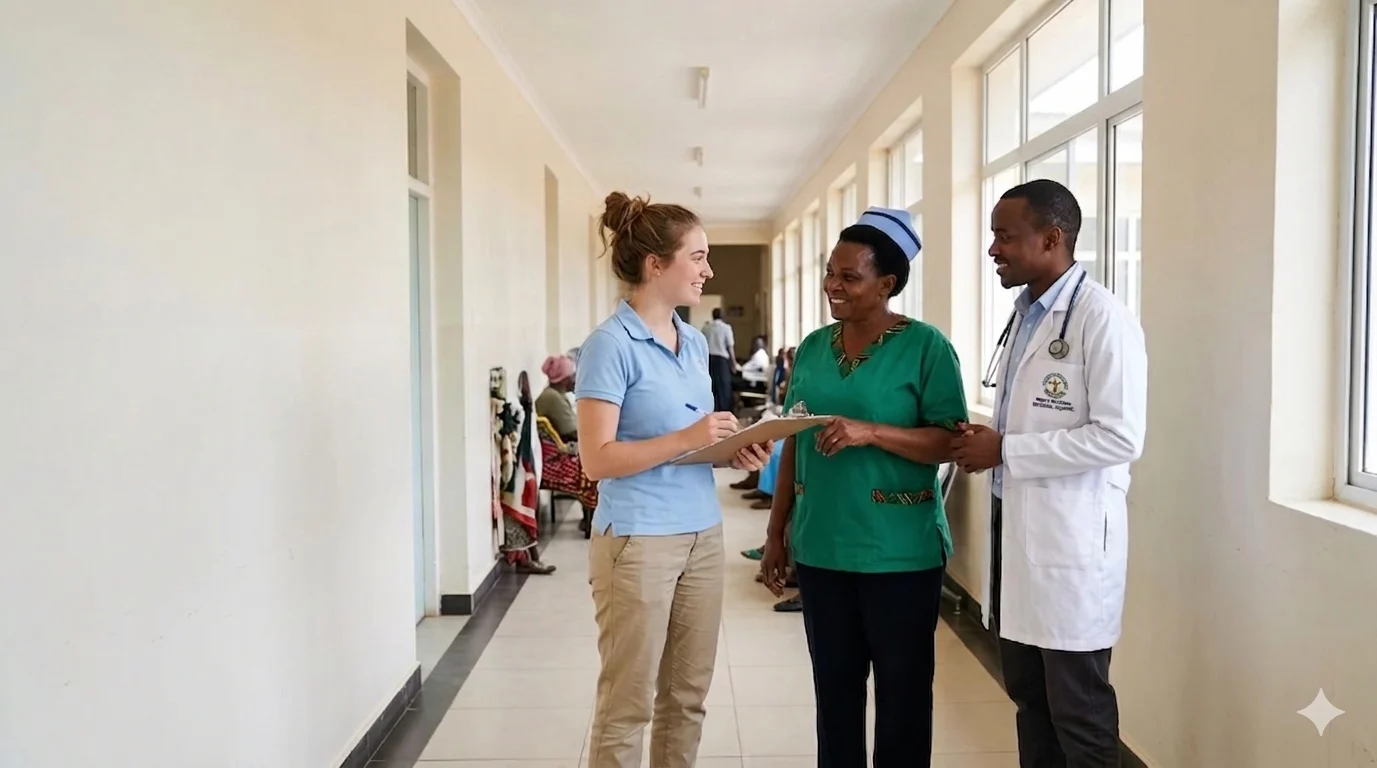
So, you have made a remarkable decision: you are going to volunteer at a hospital in Africa. Whether you are joining a program through Hostel Hoff, a trusted volunteering organisation connecting passionate individuals with clinics and hospitals in Tanzania since 2006, or arriving independently to support a local facility, your presence will make a genuine difference in communities that need it most.
But before your first shift begins, one question almost every new volunteer asks is: What do I actually wear? In an African hospital context, this question carries more weight than it might in a Western setting. What you wear when volunteering at a hospital is shaped not only by universal healthcare hygiene and safety standards, but also by the local climate, deeply held cultural values around modesty, and the expectations of the communities you serve. Getting this right from day one is a mark of respect, and it matters.
Why Dress Code Matters When Volunteering at a Hospital
Hospitals are unlike any other volunteering environment. Patients are vulnerable, hygiene is critical, and first impressions carry real weight. In African healthcare settings, the importance of appropriate dress goes even further. It communicates respect for local culture, earns the trust of patients and medical staff, and signals that you are there to serve rather than to stand out.
As OMAWA Tanzania, an organisation that places volunteers in Tanzania, notes, Tanzania is a very modest culture when it comes to physical dress. You must dress appropriately to avoid offending local people. Their guidance is clear: volunteers are there as guests, and dressing well is a form of cultural respect.
Beyond cultural considerations, clothing in a clinical setting also has direct safety and infection control implications. The Society for Healthcare Epidemiology of America (SHEA) notes that attire choices should balance professional appearance, comfort, and practicality with the potential for apparel to facilitate cross-transmission of pathogens. In short, what you wear is part of the care environment.
At Hostel Hoff, volunteers supporting local clinics and hospitals in Tanzania are encouraged to approach every aspect of their role with intention, and dressing appropriately is the very first step. The organisation emphasises that following the rules and guidelines of your host facility is essential to being a reliable, effective volunteer.
General Dress Code Guidelines for Hospital Volunteers
Before looking at specific clothing items, there are universal principles that apply to all hospital volunteering, whether in Africa or anywhere else in the world. These form the baseline from which Africa-specific considerations are layered.
- Always check with your hospital’s volunteer services or coordinator before your first day, as every facility may have specific requirements.
- Clothing should be clean, pressed, and in good condition at all times.
- Modest, professional attire is the standard baseline and doubly important in African cultural contexts.
Dressing appropriately will earn you the respect of your colleagues. This is not just about following rules, but it is about building relationships in a community where trust is everything.
What to Wear When Volunteering at a Hospital
Here is a practical breakdown of clothing for hospital volunteers in an African setting. These recommendations factor in both clinical requirements and the cultural norms of Tanzania and East Africa more broadly.
Tops
- Collared polo shirts or button-down shirts in solid, neutral colours
- Short-sleeved shirts are ideal for the tropical heat, according to Peace Corps Tanzania guidelines; a plain, collared t-shirt or polo shirt with no logo or print is appropriate for health volunteers.
Bottoms
- Trousers or slacks in neutral colours (khaki, black, dark navy) must be worn. Also, whatever is worn on the bottom must go below the knee.
- For women: modest skirts or dresses that fall well below the knee are culturally appropriate and widely recommended across Tanzania volunteering programmes.
Layers and Additional Pieces
- A lightweight cardigan or jacket is useful for air-conditioned wards or cooler highland mornings. Particularly relevant in Moshi and Arusha
- A light scarf or shawl is a versatile item recommended by multiple Tanzania volunteering guides as it can double as a cover-up for cultural settings.
The Volunteer Africa Ultimate Packing Guide specifically recommends that female volunteers in Africa pack a few skirts to respect local culture while in their volunteer role, noting that breathable, lightweight options are both modest and comfortable in the heat.
Clothing Items to Avoid in a Hospital Setting
In an African hospital context, the list of items to avoid is shaped by both clinical hygiene standards and cultural sensitivity. The following are either prohibited in most facilities or strongly inappropriate in a Tanzanian cultural setting:
- Shorts are not acceptable in hospitals, clinics, or in formal public settings in Tanzania.
- Shoulders must be covered during all placements.
- Clothing above the knee, particularly for women, is considered disrespectful in most Tanzanian communities.
- Graphic or printed T-shirts with logos or slogans
- Clothing with potentially offensive slogans or imagery, as PMGY’s Tanzania volunteer guidelines specifically state, avoid clothing that may have potentially offensive slogans on
As That Lady from Europe, a long-term Africa volunteer, observes: in Africa, most people cover their shoulders, knees, backs, and bellies on any official occasion, like schools, hospitals, and offices, and often just outside the family environment.Any clothes above the knee are considered for children. This is a useful cultural benchmark for international volunteers to bear in mind.
Footwear Guidelines for Hospital Volunteers
Footwear is one of the most safety-critical elements of the hospital volunteer dress code in any setting. In Tanzania, there are practical terrain considerations in addition to the clinical ones.
Expert guidance from Infection Control Today, citing SHEA recommendations, is clear: all healthcare personnel’s footwear should have closed toes, low heels, and non-skid soles. Research shows that closed-toe, low-heeled, non-skid shoes reduce exposure to infectious materials, sharp injuries, and slipping hazards. This is non-negotiable in any hospital.
In an African context, the Joy Kids Tanzania packing guide additionally recommends comfortable walking shoes for daily volunteer activities, noting that many hospital and clinic locations in Tanzania involve uneven or unpaved roads on the way to and from placements. Sturdy, closed-toe shoes serve double duty here.
Follow these footwear rules:
- Closed-toe, closed-heel shoes at all times in any clinical setting
- Low heels only. Stilettos or high-heeled dress shoes are not allowed
- Non-skid or rubber soles for safety on hospital floors
- Sandals and flip-flops are not appropriate for hospital or clinic placements
- Choose sturdy, practical footwear that handles both indoor wards and outdoor terrain
- Shoes should be clean and in good repair on every shift
Grooming and Hygiene Expectations
Grooming and personal hygiene are as important as clothing in a hospital environment, and in Tanzania’s heat and humidity, they require extra daily attention.
The Regions Hospital Dress Code Policy states that employees and volunteers are expected to present a good appearance, including good personal grooming and hygiene, and appropriate dress for the work being performed. In a Tanzanian context, this expectation is amplified by cultural norms of cleanliness and modesty.
Key grooming guidelines for Africa hospital volunteering:
- Hair: Keep hair clean, neatly combed, and tied back if long, which is particularly important in patient care areas. In Tanzania, unusual or brightly coloured hair can attract unwanted attention and may be seen as culturally inappropriate at a medical placement.
- Nails: Keep fingernails short, clean, and trimmed. Artificial nails, gel nails, and nail embellishments are typically not permitted in direct patient care settings due to infection risk.
- Tattoos and piercings: Cover them as much as possible at your placement. As PMGY’s Tanzania volunteer handbook guidance specifically advises, tattoos and piercings should be covered where possible whilst at placement.
- Makeup: Keep cosmetics minimal and natural. Heavy makeup is not appropriate in a clinical setting.
- Fragrance: Avoid perfume and aftershave as many patients are sensitive, and some facilities maintain fragrance-free environments.
Seasonal Clothing Tips for Hospital Volunteering
Unlike in Western countries, where seasonal dressing follows predictable temperature changes, Tanzania’s tropical climate has its own rhythm, shaping what you pack and wear every day at your placement.
According to the Peace Corps Tanzania packing guidance, Tanzania has a tropical climate with large regional variations. The hottest and most humid areas are the coast and western lowlands. The interior and highland areas, like Moshi and Arusha, are milder and can cool significantly at night.
Hot and Humid Conditions (Coastal and Lowland Areas)
- Choose lightweight, breathable fabrics Peace Corps specifically recommends cotton and linen over synthetic fabrics like polyester, as they allow airflow and keep the body cooler.
- Loose-fitting trousers are cooler than tight-fitting pants in humid environments. The Peace Corps notes that loose-fitting pants are generally cooler than jeans.
- Dark or mid-tone colours are better than white in dusty, outdoor environments where staining is common.
- Quick-drying fabrics are practical as you will need to wash and re-wear clothes frequently.
Highland and Cooler Regions (Moshi, Arusha, and Surrounding Areas)
- Bring a light jacket or fleece for mornings and evenings. The Boresha Maisha Projects packing guide for Africa notes that in places like Tanzania, temperatures can dip in the early morning hours
- Layering is key: short-sleeved shirts under a light professional sweater work well for hospital environments where interior temperatures vary.
Rainy Season Considerations
- Tanzania has two rainy seasons, the long rains (March–May) and short rains (October–December). During these periods, waterproof or quick-drying footwear is practical.
- Lightweight long-sleeved shirts also protect against mosquitoes in the evenings, an important health consideration for malaria-endemic Tanzania
The Joy Kids Tanzania volunteer guide recommends breathable fabrics like cotton or linen for hot, humid days, along with long-sleeved shirts and long pants to protect against both sun and mosquitoes, a combination of practical comfort and protection.
Tips to Maintain a Professional and Comfortable Look
Dressing well in Africa does not have to mean suffering in the heat or being formal. Here are some practical tips to help you look professional and feel comfortable throughout your volunteering shift:
- Invest in a small number of quality, versatile pieces, neutral-coloured loose trousers and collared shirts in breathable fabric, which will take you through every shift.
- Wash and air-dry clothes regularly. In Tanzania’s heat, clothing absorbs sweat quickly, and daily washing is the norm.
- Pack wrinkle-resistant fabrics wherever possible; a crumpled uniform does not project professionalism.
- Keep a spare set of volunteer-appropriate clothes in your bag in case of spills or accidents at the placement.
- Always wear your ID badge visibly, as it is both a professional expectation and an important part of hospital security.
The Hostel Hoff guide on dos and don’ts of volunteering is a valuable resource here. It reminds volunteers that every volunteering organisation has its rules and regulations. Be sure to familiarise yourself with these guidelines and follow them diligently. This applies fully to dress codes.
Common Mistakes Volunteers Should Avoid
Even well-intentioned volunteers can get the dress code wrong, particularly those arriving from Western countries where hospital and social dress norms differ significantly from those in Tanzania. Here are the most common pitfalls:
- Assuming Western standards apply. Both clinical requirements and strong cultural expectations around modesty shape hospital dress code norms in Africa. What is acceptable at home may not be acceptable here.
- Wearing shorts or sleeveless tops. These are among the most commonly cited dress code violations in African volunteer programmes, yet placements avoid them entirely.
- Ignoring the heat and overdressing. Synthetic, heavy, or dark formal clothing may look professional, but it will be unbearable and impractical in Tanzania’s climate. Choose breathable fabrics.
- Wearing strong perfumes. This affects sensitive patients and violates the hygiene standards of clinical environments.
- Forgetting the ID badge or volunteer jacket. This is both a security requirement and a professional expectation in any hospital setting.
If you are volunteering through Hostel Hoff in Tanzania, your on-the-ground coordinator will be an invaluable source of guidance on what is and is not appropriate at your specific placement facility. Always defer to their local knowledge.
Choosing the right clothing for volunteering at a hospital in Africa is about far more than looking the part. It is about respect for the patients in your care, for the medical staff you work alongside, for the cultural values of the community, and for the institution that has welcomed you. In Tanzania specifically, modesty, cleanliness, and professionalism are deeply intertwined with how a volunteer is perceived and trusted.
To recap the key points for Africa hospital volunteering:
- Wear clean, modest, lightweight business-casual clothing, collared shirts and loose trousers or below-the-knee skirts.
- Cover shoulders, knees, and ankles. Tanzania’s cultural standards require significantly more coverage than most Western hospital settings.
- Wear closed-toe, low-heeled, non-skid shoes that are appropriate for both clinical safety and varied terrain.
- Cover tattoos and piercings, and keep grooming minimal and hygiene-focused.
- Avoid shorts, sleeveless tops, jeans, tight clothing, graphic T-shirts, and strong fragrances.
Organisations like Hostel Hoff have been facilitating meaningful hospital volunteering in Tanzania since 2006, connecting volunteers with local clinics and hospitals where their presence creates real impact.
Ready to take the next step? Explore volunteering opportunities in Tanzania through Hostel Hoff, learn how to find the right volunteer opportunity for you, and read more about volunteering with no experience. The community is ready to welcome you, and how you show up matters.