
Orphanage volunteering options in Tanzania are many, but the real question is: are they ethical? If you are looking to volunteer in Tanzania, you must have heard warnings about these programs.
Orphanage volunteering can be done in ways that genuinely help children. At Hostel Hoff, we believe the answer is not to avoid working with children altogether, but to understand what responsible, child-centered volunteering actually looks like before you sign up.
Why Does the Question Even Come Up?
Over the past decade, child welfare experts have raised concerns about a rise in orphanages that exist mainly to attract foreign volunteers rather than to serve children. In some cases, children who still have living parents are placed in these facilities because families are told that an orphanage offers better food, schooling, or opportunity.
A constant rotation of strangers coming in and out, even well-meaning ones, can disrupt a child’s sense of attachment and stability. This is the core of the orphanage volunteering ethics debate, and it is a conversation every prospective volunteer should take seriously rather than dismiss.
That said, this does not mean every program is exploitative. Reputable organisations in Tanzania work hard to prioritise the wellbeing of children over the convenience of volunteers, and they are transparent about how your time and money are being used.
What Ethical Programs Look Like?
When you research volunteer opportunities in Tanzania, look for a few clear signals that any organisation that takes child protection seriously would follow.
Minimum stay requirements. Programs that genuinely care about attachment and continuity often ask volunteers to commit to at least four weeks, sometimes longer. Short, one-week placements that involve direct childcare are usually a red flag, since children benefit more from a few consistent faces than a parade of new ones every few days.
Background checks and child protection policies. Any organisation that lets you volunteer with children without requesting a police clearance certificate is not very serious about its orphanage volunteering programs. Ask directly what safeguarding measures are in place.
Financial transparency. Ethical organisations can tell you exactly where your program fee goes, whether that is accommodation, staff salaries, school fees, or community projects. If an organisation cannot explain this clearly, you should think again before signing up for a volunteer program with it.
Local leadership and family preservation focus. The strongest programs work alongside Tanzanian staff and, where possible, support family reunification or community-based care rather than encouraging children to remain institutionalised indefinitely.
Volunteering Children the Right Way
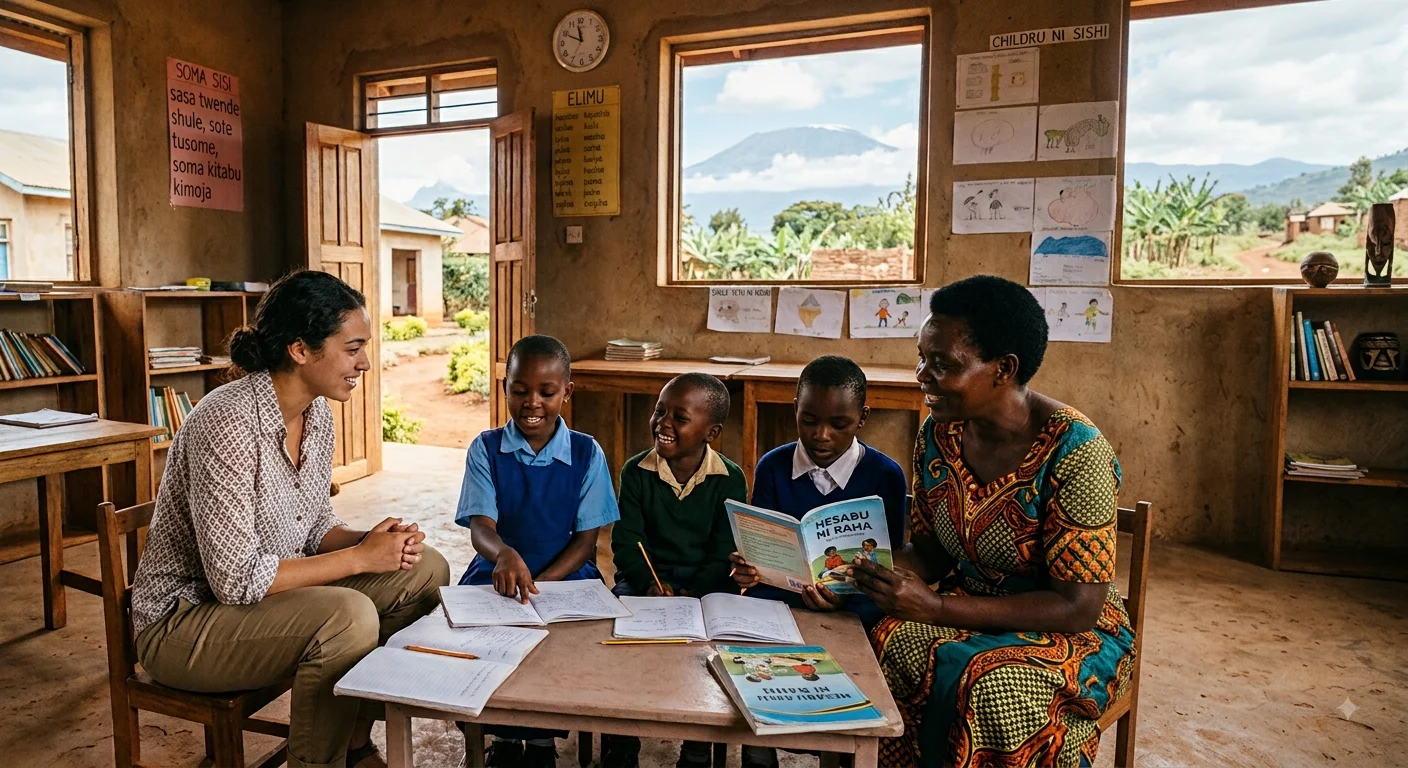
If you want to volunteer for children in the Tanzanian style, there are ways to make your time meaningful without contributing to harmful cycles. Teaching support, structured play sessions, and creative activities such as art, music, or sport are generally considered lower-risk because they involve group settings rather than one-on-one caregiving and build skills that benefit the wider classroom or community.
At Hostel Hoff, our approach centers on education and community development rather than direct orphanage placements. Volunteers work in classrooms, after-school programs, and community projects around Moshi, supporting local teachers and staff instead of replacing them. You can read more about our teaching placements and our wider community development work to see how this looks in practice.
Questions to Ask Before You Commit
Before booking any orphanage volunteering program in Tanzania, ask the organisation these questions directly:
- How long has this project existed, and who runs it locally?
- What training or orientation will I receive before working with children?
- Is a background check required of every volunteer?
- How is my program fee allocated?
- Does the organisation work toward family reunification where possible, or does it primarily focus on long-term institutional care?
A program that welcomes these questions and answers them with specific, verifiable details is far more likely to be operating responsibly.
What Volunteers Often Get Wrong?
Many first-time volunteers arrive with the best intentions but assume that spending time with children is automatically helpful simply because it feels rewarding. It is worth remembering that a fulfilling experience for you and a genuinely beneficial experience for a child are not always the same thing. A responsible mindset means being willing to take on less glamorous tasks, such as classroom preparation, resource building, or supporting teachers behind the scenes, even if that feels less emotionally dramatic than one-on-one bonding with a child.
The most respected organisations actively steer volunteers toward these supportive roles precisely because they protect children while still making real use of your time, skills, and energy.
It also helps to manage expectations before you arrive. Meaningful change takes longer than a two- or three-week trip, and volunteers who leave feeling most satisfied are usually the ones who understand they are contributing to an ongoing effort rather than a quick fix.
The Bigger Picture in Tanzania
Tanzania continues to face real challenges around poverty and limited access to education and healthcare, which is exactly why thoughtful volunteer support still matters. The goal is not to stop caring or stop showing up. It is to show up in ways that strengthen local systems rather than undermine them. This is why so many experienced volunteer organisations have shifted their programs away from direct orphanage caregiving and toward teaching, skills training, and community projects that build lasting capacity.
If you are still deciding what kind of placement suits you, our blog on How To Choose the Right Volunteer Program in Tanzania walks through the practical questions to consider, and our article on the Dos and Don’ts of Volunteering covers behavior and etiquette that matters just as much as the program you choose.
Making Your Trip Count
Ethical volunteering is not about finding the one perfect answer. It is about staying curious, asking hard questions, and choosing organisations that put children first. Look for programs with genuine local partnerships, realistic time commitments, and a clear explanation of the impact on children’s lives.
At Hostel Hoff, our volunteers stay at a welcoming hostel base in Moshi and work on projects designed with input from the local community, covering education, women’s empowerment, and grassroots development. You can explore the full range of volunteer opportunities Tanzania travelers can join with us, browse our program rates, or get in touch through our contact page if you have questions about which project fits your skills and schedule.
Choosing to volunteer in Tanzania is one of the most valuable decisions you will be making. Take the time to research, ask questions, and pick a program built around genuine community partnership. That is how a few weeks of your time create an impact in the lives of orphan children.