
An abroad volunteering program is a completely new experience. If you want to visit Tanzania for volunteering, you should have a clear understanding of the programs, the place, how and where you will work, and the overall program details.
Our Kilimanjaro teaching project pairs international volunteers with local classrooms and community initiatives, giving you the chance to contribute real skills while living in one of the most scenic corners of East Africa. If you are weighing up where to spend your time abroad, here is what this teaching and community involvement project actually looks like on the ground.
Here is a blog that breaks this bigger concept into smaller parts and helps you find answers for all your questions. Let us get started!
Why is Moshi the Right Base?
Moshi is a relaxed, welcoming town that has hosted international volunteers for years, so the local community is genuinely used to working alongside newcomers. Unlike Tanzania’s bigger cities, it is easy to walk around, affordable, and close enough to Kilimanjaro for the mountain to form a backdrop to daily life.
Volunteers stay together in shared housing near the school community, making it easy to build friendships with fellow volunteers from around the world while staying close enough to the project sites to avoid long daily commutes. You can read more about the town itself on our Moshi town page.
What Does the Teaching Volunteer Tanzania Program Involve?
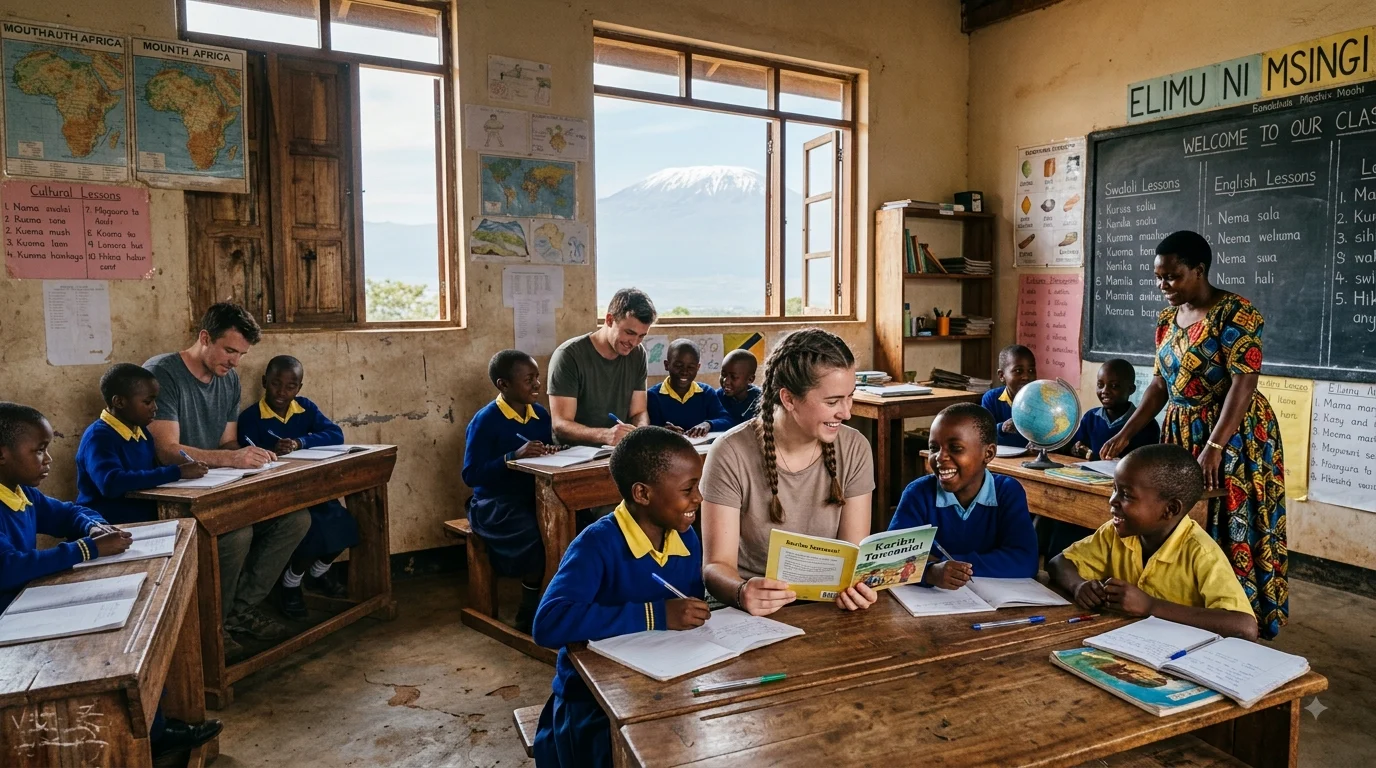
Our teaching volunteer placements in Tanzania are flexible enough to suit different skill levels, but most days follow a similar rhythm. Mornings are usually spent in the classroom supporting local teachers with English lessons, reading practice, and basic numeracy for younger children.
Volunteers often work with specific age groups for the length of their stay, which helps children build familiarity rather than facing a constantly changing lineup of new faces each week.
A typical week might include teaching younger children through songs, games, and simple vocabulary exercises, then spending afternoons with older students or adult learners who are working on conversational English to support their careers in tourism, hospitality, or local trade.
Group singing, interactive games, and hands-on activities tend to be the most effective way to hold attention and build confidence, especially with beginner English speakers.
You can find more details about our academic placements on the teaching internships page, which outlines the age groups, subjects, and daily schedule for volunteers.
Community Volunteering in Tanzania Beyond the Classroom
Community volunteering programs in Tanzania are strongest when they extend beyond the school gates, and that is very much the philosophy behind our Kilimanjaro project. Volunteers regularly take part in community events, cultural celebrations, and local development initiatives alongside teaching duties.
This involves work such as organizing an anniversary celebration for a partner school, participating in a local dance and music event, or supporting small-scale community development, such as improving classroom resources or school facilities.
This wider community involvement project is what makes the experience feel different from a purely academic placement. Here you are becoming part of the daily rhythm of a real Tanzanian town, sharing meals, celebrations, and everyday moments with the people who live there. To see how this connects with our broader development work, take a look at our community development programs.
A Typical Volunteer Week
Weekdays are structured around your teaching or community placement, generally running for a set number of hours each morning and afternoon, with time built in for lesson planning, orientation, and settling into the project’s rhythm. Weekends are left free, and many volunteers use this time for the classic Tanzania experience: a short safari, a hike partway up Kilimanjaro, or a visit to nearby waterfalls and hot springs.
Evenings during the week often bring volunteers together for dinner in town or for shared cooking at the house, where the community bonds are formed. Many past volunteers describe these informal moments as the time to gettin to know both fellow volunteers and the local teachers and staff.
For the ideas for your free time, our guide to the best things to do in Tanzania covers everything from short safaris to cultural excursions around Moshi.
Who This Volunteering Program is For?
This volunteer program in Tanzania works well for university students on a gap year, career breakers looking for a meaningful few weeks abroad, and teachers or education graduates seeking international classroom experience. No formal teaching qualification is required, though a genuine interest in working with people, patience, and a willingness to adapt to a different pace of life will serve you well.
If you are still comparing options, our blog on choosing the right volunteer program in Tanzania can help you decide whether a teaching-focused placement or a broader community development role better suits your goals.
Learning Alongside Teaching
One detail that often surprises new volunteers is how much they end up learning themselves. Working closely with local teachers offers a real window into how Tanzanian classrooms operate, from the resourcefulness required when supplies are limited to the creativity teachers use to keep large classes engaged.
Many volunteers pick up basic Swahili phrases within their first week simply through daily interaction with students, host families, and fellow staff, which makes the whole experience feel far more immersive than a typical short trip abroad. If you want a head start, our blog on the benefits of learning Swahili while volunteering in Tanzania explains why even a handful of phrases can transform your daily interactions with the community.
It is also common for volunteers to walk away with a different perspective on education itself. Seeing how much progress a class can make with consistent encouragement, patience, and simple teaching tools tends to reshape how volunteers think about resources, privilege, and what genuinely helps a community grow over time.
Packing and Preparing for the Project
As your days will involve a mix of classroom work, outdoor community activities, and free weekends near Kilimanjaro, packing sensibly makes a real difference to your comfort.
Lightweight, modest clothing suitable for a classroom setting, comfortable walking shoes, and a few warmer layers for cooler Moshi evenings are all worth including. If you are unsure where to start, our detailed Tanzania Volunteer Guide page covers exactly what past volunteers have found useful, from teaching materials to everyday essentials.
Volunteering in Tanzania at the Kilimanjaro teaching and community project is a genuinely rewarding way to combine purposeful work with a life-changing setting. Between classroom time, community involvement, and weekends spent exploring one of the most beautiful regions in East Africa, it is easy to see why so many volunteers extend their stay once they arrive.
To check current program dates and pricing, visit our rates page, or reach out through our contact page to start planning your placement with Hostel Hoff.