
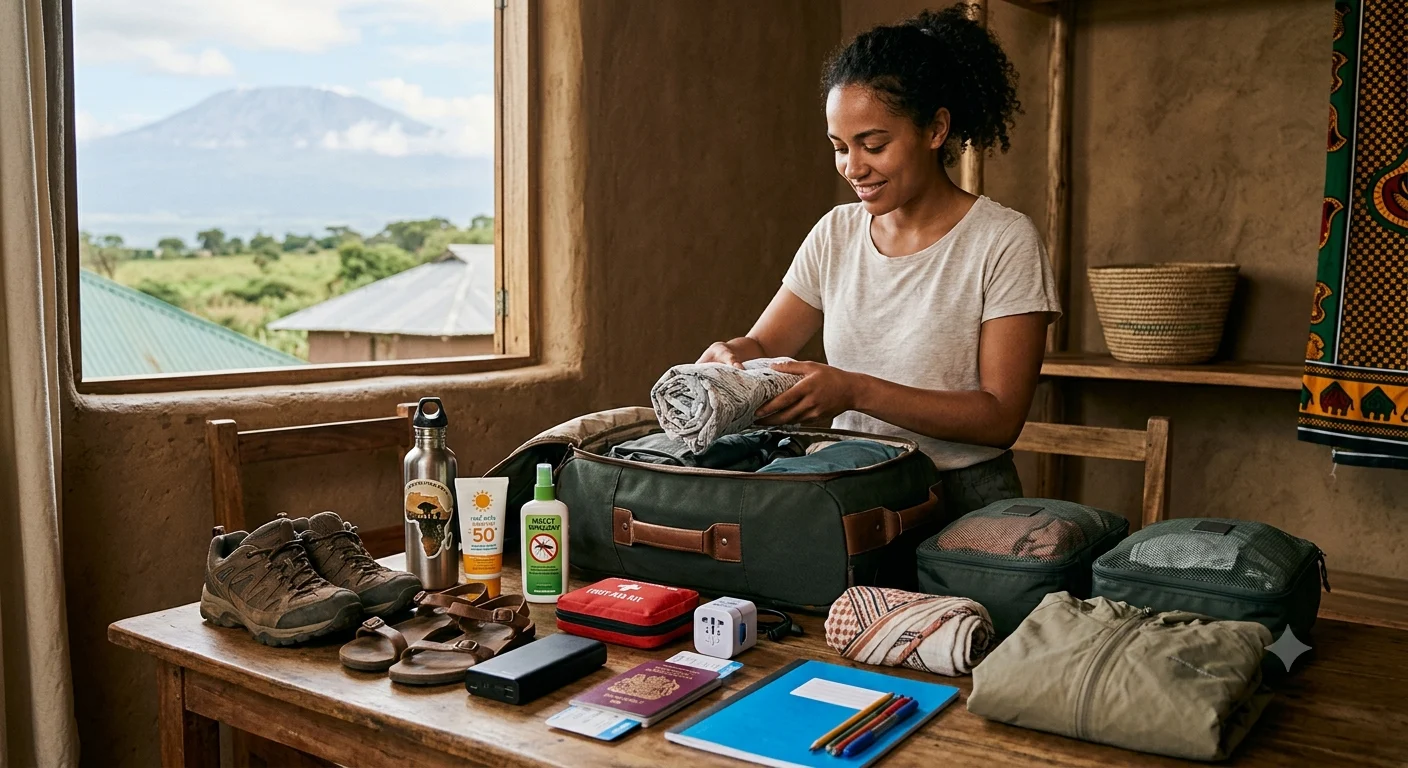
Volunteering in general does not require fancy outfits. Keep it simple and modest. You also have a lot of places to explore in Tanzania, like safaris, hiking, and more, so you should pack comfortable clothes .
If you have to work indoors, you do not have to pack overcoats or stiff clothes. Light ones are enough for this purpose. Choose the clothes that let you switch between classroom teaching, community projects, cool Moshi evenings, and the occasional weekend safari.
You will also see a few cultural restrictions regarding attire and a few non-negotiable items, such as insect repellents, medicines, and more, which are discussed in the blog below. Let us get started!
Dressing With Cultural Respect
With so many volunteers from different countries, Tanzania is a welcoming place with friendly people, but they do have some restrictions as well. Before you start packing for Tanzania, you should have a clear understanding of what you should carry with you:
- For women, lightweight skirts or trousers that cover the knees and tops that cover the shoulders are the safest choice, since leggings alone are generally viewed as underwear rather than outerwear here.
- A couple of long, breathable skirts and a light scarf go a long way, whether you need to cover your shoulders in a village setting or want an extra layer for a chilly local bus ride.
- For men, a few collared shirts or polo shirts are worth packing alongside your usual T-shirts, especially if your placement involves teaching or working alongside local staff.
- One item to leave at home entirely is anything in camouflage print, since these patterns are associated with the military in Tanzania and can cause unwanted attention.
- Whatever you pack, make sure you pack lightweight and modest clothing that lets you breathe and is easy to work with. Also, check for clothes that dry faster so you do not have to pack a lot.
Clothing for Three Different Climates
A common mistake volunteers make is packing for one type of weather, when Tanzania actually spans several climate zones. If you are based around Moshi or Arusha near Kilimanjaro, expect warm days but cool nights, sometimes dropping low enough to need a fleece or light jacket.
If your trip includes time on the coast or in Zanzibar, humidity is high, so breathable linen or cotton will serve you far better than heavier fabrics. If you are planning a safari as part of your trip, stick to neutral tones like khaki and olive rather than bright colors, since darker shades like black and navy can attract tsetse flies.
Footwear That Can Handle Everything
You will likely walk more during your placement than you expect, so footwear deserves real thought on your volunteer packing list. Sturdy, comfortable walking shoes or boots are essential for dusty roads and uneven paths around most project sites.
A pair of supportive sandals with a back strap works well for everyday wear once you are off duty. Also, it is worth packing one smarter pair of shoes for any community events, school ceremonies, or church visits you might be invited to during your stay.
Health and Comfort Essentials
Along with the basics, a well-stocked health kit makes a noticeable difference to how comfortable your placement feels. Pack a supply of any personal prescriptions you take regularly, since finding specific brands locally can be difficult.
A DEET-based or picaridin-based insect repellent, sunscreen rated at least SPF 30, hand sanitizer, and a small supply of rehydration salts and basic diarrhea medication are all worth including. For a deeper look at exactly which vaccines and health preparations to sort out before you travel, see our companion blog on things to know before you volunteer in Tanzania.
A reusable, filtered water bottle is genuinely useful here too, both for your budget and for reducing plastic waste, since Tanzania enforces a strict ban on single-use plastic bags. Using mesh packing cubes instead of ziplock bags will help you stay organized without issues at customs.
Practical Extras Worth Bringing
Beyond clothing and health items, a few smaller additions can make daily life much smoother. A universal power adapter suited to Tanzania’s Type G plug sockets and a portable power bank for days when electricity is unreliable are both worth the extra space in your bag.
If you plan to bring small gifts for the community, useful items like stationery, notebooks, or a deflated football with a pump tend to be far more appreciated than sweets, which can contribute to dental problems in areas with limited access to dental care.
What Not to Overpack?
One thing seasoned volunteers often mention is how easy it is to buy everyday items locally once you arrive, from toiletries to basic clothing. Leaving a little extra space in your suitcase means you can bring home local textiles or crafts without stress at the end of your trip.
It is also smart to keep a change of clothes and any essential medication in your carry-on bag rather than in checked luggage, just in case of any flight delays.
Money and Documents
It is worth setting aside a section of your bag purely for financial and administrative preparation. Bring a modest amount of cash in US dollars, ideally newer notes, since some banks and exchange points in Tanzania are strict about accepting only recent notes in good condition. Let your bank know you will be traveling so your card is not blocked for unusual activity, and consider a travel-friendly account that offers fair exchange rates for local currency.
Alongside your passport, keep a printed copy of your volunteer placement letter, travel insurance details, and any vaccination records you were advised to carry, since rural areas do not always have reliable internet access if you need to pull up a digital copy in a hurry.
Building Your Bag Around Your Project
Every placement is a little different, so consider what your specific role entails before finalizing your bag. A teaching placement calls for smart, comfortable clothing, while more physical community work benefits from sturdier items.
If unsure, ask your coordinator directly, since a short conversation beforehand can save you from overpacking or arriving without something essential.
To keep things simple, a solid Tanzania travel packing list should include modest, breathable clothing suited to warm days and cool evenings, sturdy walking shoes plus casual sandals, a scarf or shawl, insect repellent and sunscreen, personal medication, a reusable water bottle, a universal adapter, power bank, and printed copies of your important documents. Pack light, pack smart, and leave room to bring a little of Tanzania home with you.
If you are still finalizing your placement details, take a look at our volunteer programs in Tanzania to see what to expect from your specific project, or read our blog on how to make the most out of your volunteer experience for tips that go beyond packing.
For any last-minute questions before you fly, our contact page is the fastest way to reach our team.