
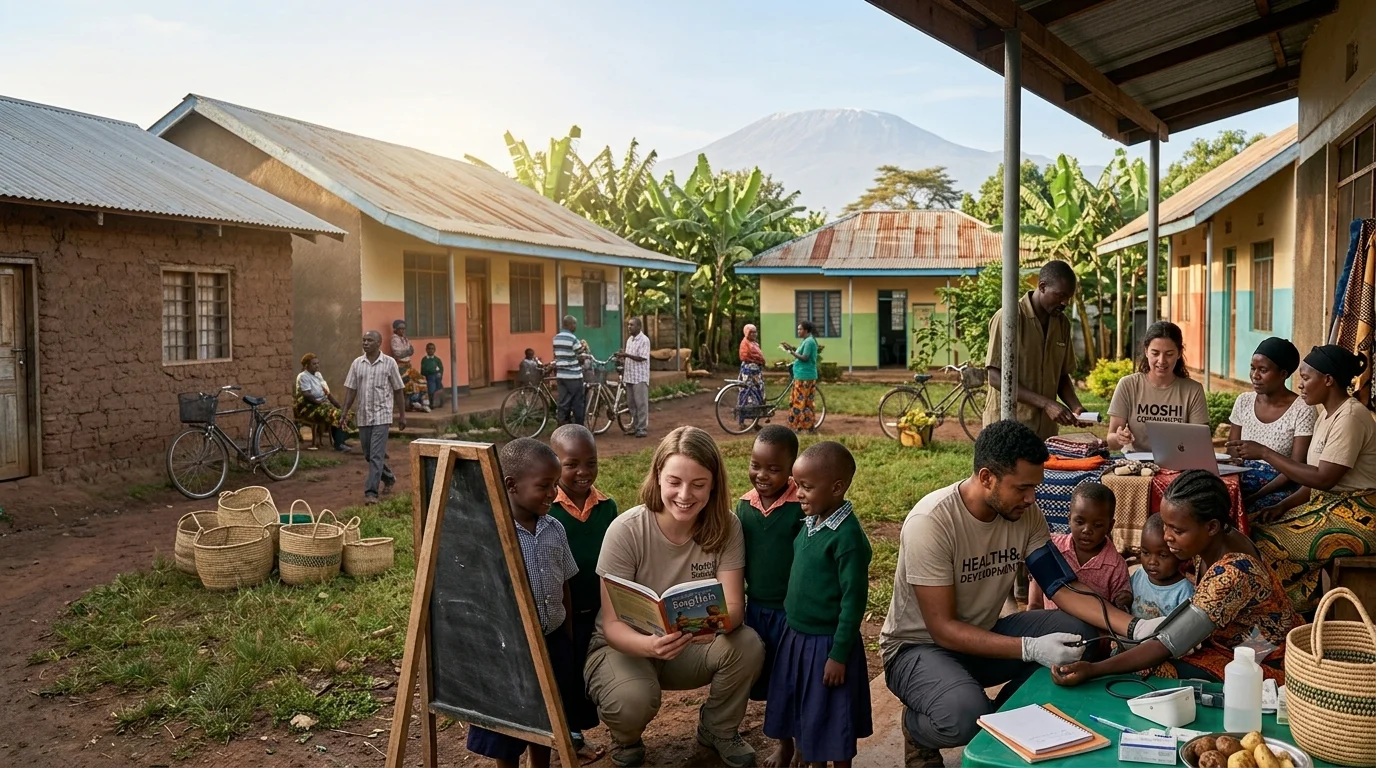
Volunteering is an exchange of values and lessons. It is not that only you give, but the reality is you get a lot in return. Volunteers here in Moshi arrive with a simple plan to help the individuals here. Still, instead, they help themselves in finding a career path, learn about cultures from around the world and become a better person.
As a volunteer, you will help the children here read English, assist doctors with the daily cases, organise healthcare check-ups for people who cannot go to the hospital, help an orphan with their daily chores, and, in your free time, you can explore the nearby places as well.
This blog deals with this exact part of volunteering. If you are someone looking to proceed with a volunteer program, then you should go through this blog to understand the benefits of volunteering.
Understanding the importance of volunteering
The importance of volunteering is easy to underestimate until you see it up close. In and around Moshi, our partner projects run on small budgets and large amounts of goodwill. A nursery school with sixty children and two teachers changes completely when two extra adults walk through the door. A women’s group trying to launch a small business moves faster when record-keeping is being done by someone else. You can be that someone!
Your contribution here is practical rather than symbolic. That matters, because volunteering only becomes meaningful when the work is genuinely needed. Every placement we arrange through our volunteering programs in Tanzania is built around a request from the community itself, and not around what looks good in a photograph.
The Personal Benefits of Being a Volunteer
As said, you receive more than you give while you volunteer, so it’s time to discuss the real benefits of being a volunteer:
Your Health Quietly Improves
This is one of the more surprising volunteer benefits. People who give their time regularly to volunteering show better physical functioning and even lower mortality than those who do not. Regular contact with other people also protects against low mood and stress. All this is because you feel good when you do good for someone else.
Volunteers at our hostel often notice this without ever naming it. You are outdoors more. You walk more. You spend evenings talking to people instead of scrolling on your phone. We can look at this more closely in our blog on the mental health benefits of volunteering.
Confidence You Cannot Fake
Volunteering lifts self-esteem because you are doing something you know is worthwhile. We see this constantly. A volunteer who arrives nervous about standing in front of a class is running lessons alone by week three. Someone who has never travelled outside Europe is bargaining in Swahili at the market by month two.
Almost everyone finds the first week difficult. The language barrier is real and so is culture shock. Pushing through that is exactly where the confidence comes from. Volunteering in a new country will help you build this exact confidence.
A Clearer Sense of Purpose
Purpose is one of the strongest volunteer benefits, and it is the one our volunteers mention most often once they are back home. Days here volunteering are in much better shape. You know who is waiting for you in the morning and you know why your presence matters to them. That clarity tends to follow people into ordinary life afterwards, into study choices, job applications and the causes they decide to support.
Students in particular tell us the experience helped them settle on what to study. If you are weighing up a gap year, our blog on why volunteering matters for students gives you more details.
Friendships That Last
You will share a kitchen, a dala dala ride and a weekend trip to the hot springs with people from ten different countries. Many of our former volunteers still travel to see each other years later. That is not a small thing. You are building lifelong relationships here you can nourish later on.
The Career Benefits of Volunteering
Volunteering opens you to a list of career opportunities. Here are a few of the benefits you will be getting from volunteering:
Skills That Employers Actually Want
Teamwork, communication, problem-solving, planning and organisation all get tested here in ways an office requires. Seventy-six percent of volunteers said they developed core work skills through their service. Volunteering for professional development works because the learning is unavoidable.
A Chance to Test a Career Before Committing
If you think you want to be a nurse, a teacher or a development worker, spending three months doing something close to that job tells you more than three years of reading about it. Our teaching internships and medical and nursing internships exist for this reason.
Something Worth Putting On Your CV
Employers pay attention to volunteer experience because it signals initiative and commitment. Interns who complete a placement with us receive a professional reference, which carries real weight for a graduate with a thin CV. Our guide on adding volunteer work to your resume explains how to present it well.
A Network That Crosses Continents
The people you meet on a placement are not simply company for the evening. They are project directors, local teachers, nurses, coordinators and volunteers who came before you. Several of our former volunteers have gone on to work in international development, medicine and education, and the introductions they made in Moshi opened those doors.
Because we work with schools, clinics, women’s groups and specialist centres across the region, we can put you in direct contact with project leaders before you arrive, so you know what skills are needed and how best to prepare. Our page on internships in Tanzania explains how that guidance works in practice.
Cultural Fluency
Working across a language barrier and a different set of social norms builds a kind of adaptability that reads clearly in interviews. The OECD education blog makes a similar point about volunteering as a route to both personal growth and career progress.
What Makes Hostel Hoff Different?
Many agencies charge thousands for a few weeks abroad. We took the opposite approach. At Hostel Hoff, you pay for your accommodation, and your volunteering is free, as we believe it should be. There is no obligation to fundraise, though volunteers who do raise money can put it straight into their own project and see exactly where it goes.
We sit in Moshi town, within reach of schools, clinics, orphanages, disability centres and women’s cooperatives. Placements run from one month up to twelve months, and we match people to projects based on skills, interests and how long they can stay.
How To Begin?
Start by reading our volunteering guide, which covers visas, immunisations, weather, money and what to pack. Then look through the project categories and think honestly about what you can offer and what you want to learn.
You do not need qualifications for most placements. A caring attitude and a willingness to work are enough. If you are unsure where to start, our post on how to volunteer with no experience is a good place to look. When you feel ready, get in touch and tell us about yourself.
The benefits of becoming a volunteer are not really a list. They are the sum of a hundred small moments. A name remembered. A lesson that finally lands. A sunset over Kilimanjaro after a long, dusty day. You will give your time, your patience and your energy, and you will get back far more than you expected to.
Come and find out for yourself.